How long does it take to read Story of the Human Body?
Story of the Human Body by Daniel E. Lieberman takes about 8 hours 48 minutes to read at 250 words a minute.
About 8 hours 48 minutes
A week or two of reading
First published 2013. 480 pages, about 132,000 words.
18 days at 30 minutes a day
Estimate based on 275 words per page.
At other speeds
| Slow, 150 words a minute | 14 hours 40 minutes |
| Average, 250 words a minute | 8 hours 48 minutes |
| Fast, 400 words a minute | 5 hours 30 minutes |
The page count is the median across 3 editions, so your copy may differ. How we calculate.
About the book
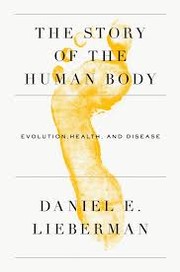
In this landmark book of popular science, Daniel E. Lieberman—chair of the department of human evolutionary biology at Harvard University and a leader in the field—gives us a lucid and engaging account of how the human body evolved over millions of years, even as it shows how the increasing disparity between the jumble of adaptations in our Stone Age bodies and advancements in the modern world is occasioning this paradox: greater longevity but increased chronic disease. The Story of the Human Body brilliantly illuminates as never before the major transformations that contributed key adaptations to the body: the rise of bipedalism; the shift to a non-fruit-based diet; the advent of hunting and gathering, leading to our superlative endurance athleticism; the development of a very large brain; and the incipience of cultural proficiencies. Lieberman also elucidates how cultural evolution differs from biological evolution, and how our bodies were further transformed during the Agricultural and Industrial Revolutions. While these ongoing changes have brought about many benefits, they have also created conditions to which our bodies are not entirely adapted, Lieberman argues, resulting in the growing incidence of obesity and new but avoidable diseases, such as type 2 diabetes. Lieberman proposes that many of these chronic illnesses persist and in some cases are intensifying because of “dysevolution,” a pernicious dynamic whereby only the symptoms rather than the causes of these maladies are treated. And finally—provocatively—he advocates the use of evolutionary information to help nudge, push, and sometimes even compel us to create a more salubrious environment. (With charts and line drawings throughout.)
Subjects: Human body, Human physiology, Human evolution, Adaptation (biology), Hominidae, Physiology