How long does it take to read Why the Poor Pay More?
Gregory D. Squires
Why the Poor Pay More by Gregory D. Squires takes about 4 hours 33 minutes to read at 250 words a minute.
About 4 hours 33 minutes
A weekend read
First published 2004. 248 pages, about 68,200 words.
10 days at 30 minutes a day
Estimate based on 275 words per page.
At other speeds
| Slow, 150 words a minute | 7 hours 35 minutes |
| Average, 250 words a minute | 4 hours 33 minutes |
| Fast, 400 words a minute | 2 hours 51 minutes |
The page count is the median across 1 edition, so your copy may differ. How we calculate.
About the book
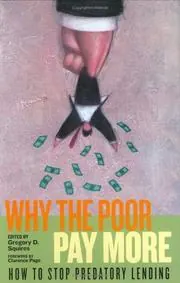
The proverbial American dream of owning a home has become an all-too-real nightmare for a growing number of families. The most vulnerable segments of our society--including minorities, the elderly, and working families--are being victimized by financiers who lure them into commitments they cannot fulfill. Collectively known as predatory lending, these practices include offering higher interest rates than can be justified by the risk, high pre-payment penalties that lock families into exploitative loans, and monstrous balloon payments that often result in default and the loss of the home. The net result can be disastrous: damage to one's credit rating, bankruptcy, and even the loss of lifelong savings. Why the Poor Pay More is an incisive exposure of these practices: how they have evolved, why they have become so prevalent in recent years, and how their negative effects can be quantified. It features in-depth analysis from prominent scholars, legal experts, and community leaders, who shed new light on the social, political, and economic consequences of predatory lending. Why the Poor Pay More is much more than an indictment of these insidious discriminatory practices. It is a call to arms for anyone concerned about how the financial-political system can be corrupted to serve the needs of the wealthy. Highlighting community initiatives already underway to combat predatory lending and an extensive listing of practical resources, Why the Poor Pay More outlines active roles that individuals, advocacy groups, financial and legal service providers, and policymakers can play in reversing this destructive trend.
Subjects: Uitbuiting, Konsumentenkredit, Discrimination in consumer credit, Leningen, Predatory lending, Discrimination in mortgage loans