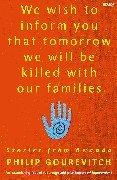
How long does it take to read We Wish to Inform You That Tomorrow We Will Be Killed with Our Families?
Philip Gourevitch
We Wish to Inform You That Tomorrow We Will Be Killed with Our Families by Philip Gourevitch takes about 6 hours 31 minutes to read at 250 words a minute.
About 6 hours 31 minutes
A weekend read
First published 1998. 355 pages, about 97,625 words.
14 days at 30 minutes a day
Estimate based on 275 words per page.
At other speeds
| Slow, 150 words a minute | 10 hours 51 minutes |
| Average, 250 words a minute | 6 hours 31 minutes |
| Fast, 400 words a minute | 4 hours 4 minutes |
The page count is the median across 29 editions, so your copy may differ. How we calculate.
About the book
An unforgettable firsthand account of a people's response to genocide and what it tells us about humanity. This remarkable debut book chronicles what has happened in Rwanda and neighboring states since 1994, when the Rwandan government called on everyone in the Hutu majority to murder everyone in the Tutsi minority. Though the killing was low-tech--largely by machete--it was carried out at shocking speed: some 800,000 people were exterminated in a hundred days. A Tutsi pastor, in a letter to his church president, a Hutu, used the chilling phrase that gives Philip Gourevitch his title. With keen dramatic intensity, Gourevitch frames the genesis and horror of Rwanda's "genocidal logic" in the anguish of its aftermath: the mass displacements, the temptations of revenge and the quest for justice, the impossibly crowded prisons and refugee camps. Through intimate portraits of Rwandans in all walks of life, he focuses on the psychological and political challenges of survival and on how the new leaders of postcolonial Africa went to war in the Congo when resurgent genocidal forces threatened to overrun central Africa. Can a country composed largely of perpetrators and victims create a cohesive national society? This moving contribution to the literature of witness tells us much about the struggle everywhere to forge sane, habitable political orders, and about the stubbornness of the human spirit in a world of extremity.
Subjects: Ethnic relations, Genocide, History, Human rights, Personal narratives, Politics and government