How long does it take to read The Wisdom of Teams?
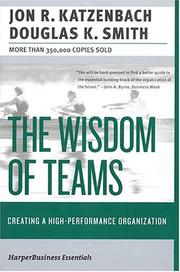
creating the high-performance organization
The Wisdom of Teams by Jon R. Katzenbach takes about 5 hours 34 minutes to read at 250 words a minute.
About 5 hours 34 minutes
A weekend read
First published 1993. 304 pages, about 83,600 words.
12 days at 30 minutes a day
Estimate based on 275 words per page.
At other speeds
| Slow, 150 words a minute | 9 hours 17 minutes |
| Average, 250 words a minute | 5 hours 34 minutes |
| Fast, 400 words a minute | 3 hours 29 minutes |
The page count is the median across 6 editions, so your copy may differ. How we calculate.
About the book
Teams are the key to improving performance in all kinds of organizations. Yet today's business leaders consistently overlook opportunities to exploit their potential, confusing teams with teamwork, empowerment, or participative management. In The Wisdom of Teams, two senior McKinsey & Company consultants argue that we cannot meet the challenges ahead - from total quality to customer service to innovation - without teams. Teams are turning companies around. Motorola relied heavily on teams to surpass its Japanese competition in producing the lightest, smallest, and highest-quality cellular phones. At 3M, teams are critical to meeting the company's well-publicized goal of producing half of each year's revenues from the previous five years' innovations. And from Desert Storm to life-saving surgeries, Kodak's Zebra Team proved the worth of black-and-white film manufacturing in a world where color was king. The Wisdom of Teams includes dozens of stories and case examples involving real people and situations. Their accomplishments, insights, and enthusiasm are eloquent testament to the power of teams. Katzenbach and Smith talked with hundreds of people in more than fifty different teams in thirty companies to discover what differentiates various levels of team performance, where and how teams work best, and how to enhance their effectiveness. Among their findings are elements of both common and uncommon sense: commitment to performance goals and common purpose is more important to team success than team-building, opportunities for teams exist in all parts of the organization, formal hierarchy is actually good for teams - and vice versa, successful team leaders do not fit an ideal profile and are not necessarily the most senior people on the team, real teams are the most common characteristic of successful change efforts at all levels, top management teams are often smaller and more difficult to sustain, despite the increased number of teams, their performance potential…
Subjects: Teams in the workplace, Work groups, Organisatiekunde, Organization and Administration, Teamwork, Institutional Management Teams