How long does it take to read The Vertical Farm?
Feeding the World in the 21st Century
Dickson D. Despommier
The Vertical Farm by Dickson D. Despommier takes about 5 hours 36 minutes to read at 250 words a minute.
About 5 hours 36 minutes
A weekend read
First published 2010. 305 pages, about 83,875 words.
12 days at 30 minutes a day
Estimate based on 275 words per page.
At other speeds
| Slow, 150 words a minute | 9 hours 19 minutes |
| Average, 250 words a minute | 5 hours 36 minutes |
| Fast, 400 words a minute | 3 hours 30 minutes |
The page count is the median across 1 edition, so your copy may differ. How we calculate.
About the book
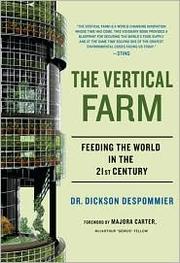
There comes an idea every once in a while that has changes the ways in which we live and help us to live longer and to prosper. The next truly great idea, originally introduced and developed by Dr. Dickson Despommier, is that of vertical farming, or farming vertically, however you want to define it. Dr. Despommier is a professor at Columbia University in the Department of Environmental and Health Services and started this concept back in 1999, which has gained considerable steam and attention this past decade, including the October 2010 publishing of his research entitled, The Vertical Farm: Feeding the World in the 21st Century. In the beginning, Despommier briefly goes over the origins of agriculture, and how and why it occurred in different areas around the Earth, around the same period of time. Next, he begins to discuss how the agriculture of today came to be and the innovations that allow us to even reach the crop yields that we have reached. He presents what we absolutely need to change about our farming practices, (i.e., herbicides, pesticides, synthetic fertilizers, etc), and offers insightful ways to help bring these changes. In the next section, he presents how vertical farms will be constructed, where they will be utilized, and how they will be funded initially before they can turn a profit. Here are the advantages that he lists for vertical farming: year-round crop production, no weather-related crop failures, no agricultural runoff, allowance for ecosystem restoration, no use of pesticides, herbicides, or fertilizers, use of 70-95 percent less water than traditional farming, greatly reduced food transportation costs, more control of food safety and security, new employment opportunities, purification of grey water to drinking water, and animal feed from postharvest plant material. It is not a question of vertical farming happening; it’s a matter of when? We, as a species, have literally run out of land to farm with an alarmingly fast global population…
Subjects: Green Revolution, Urban Land use, Agricultural innovations, Environmental aspects, Agriculture, Alternative agriculture