How long does it take to read The Structure of the Ordinary?
The Structure of the Ordinary by N. J. Habraken takes about 6 hours 47 minutes to read at 250 words a minute.
About 6 hours 47 minutes
A weekend read
First published 1998. 370 pages, about 101,750 words.
14 days at 30 minutes a day
Estimate based on 275 words per page.
At other speeds
| Slow, 150 words a minute | 11 hours 18 minutes |
| Average, 250 words a minute | 6 hours 47 minutes |
| Fast, 400 words a minute | 4 hours 14 minutes |
The page count is the median across 2 editions, so your copy may differ. How we calculate.
About the book
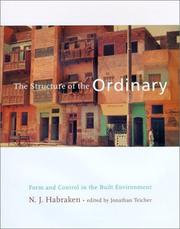
According to N. J. Habraken, intimate and unceasing interaction between people and the forms they inhabit uniquely defines built environment. The Structure of the Ordinary, the culmination of decades of environmental observation and design research, is a recognition and analysis of everyday environment as the wellspring of urban design and formal architecture. The author's central argument is that built environment is universally organized by the Orders of Form, Place, and Understanding. These three fundamental, interwoven principles correspond roughly to physical, biological, and social domains. Historically, "ordinary" environment was the background against which architects built the "extraordinary." Drawing upon extensive examples from archaeological and contemporary sites worldwide, Habraken illustrates profound recent shifts in the structure of everyday environment. One effect of these transformations, he argues, has been the loss of implicit common understanding that previously enabled architects to formally enhance and innovate while still maintaining environmental coherence. Consequently, architects must now undertake a study of the ordinary as the fertile common ground in which form- and place-making are rooted. In focusing on built environment as an autonomous entity distinct from the societies and natural environments that jointly create it, this book lays the foundation for a new dialogue on methodology and pedagogy, in support of a more informed approach to professional intervention.
Subjects: Environmental aspects, Form (Aesthetics), Environmental aspects of Architecture, Architecture, Composition, proportion, Architectural design