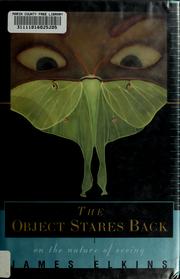
How long does it take to read The Object Stares Back?
James Elkins
The Object Stares Back by James Elkins takes about 4 hours 58 minutes to read at 250 words a minute.
About 4 hours 58 minutes
A weekend read
First published 1996. 271 pages, about 74,525 words.
10 days at 30 minutes a day
Estimate based on 275 words per page.
At other speeds
| Slow, 150 words a minute | 8 hours 17 minutes |
| Average, 250 words a minute | 4 hours 58 minutes |
| Fast, 400 words a minute | 3 hours 6 minutes |
The page count is the median across 3 editions, so your copy may differ. How we calculate.
About the book
At first it appears that nothing could be easier than seeing. We just focus our eyes and take in whatever is before us. This ability seems detached, efficient, and rational - as if the eyes are competent machines telling us everything about the world without distorting it in any way. But those ideas are just illusions, Elkins argues, and he suggests that seeing is undependable, inconsistent, and caught up in the threads of the unconscious. Blindness is not the opposite of vision, but its constant companion, and even the foundation of seeing itself. Elkins asks about objects that are too violent, too sexually charged, or too beautiful to look at directly. When we see a naked body, we either stare lasciviously or look away in embarrassment: in those moments our eyes are not ours to command. Bodies, Elkins says, are among the fundamental things that the eye seeks in every scene: when we are presented with something new, we first try to find a body, or the echoes of a body, and if we fail, our seeing becomes restless and nomadic. The same is true of things that are dead or inert. The world is full of objects that catch our eye, and that seem to have eyes of their own. The sun is an eye, perhaps the most powerful of all. It sees us as much as we see it, and when we stare at it, the sun stares back. . Using drawings, paintings, diagrams, and photographs to illustrate his points, Elkins raises intriguing questions and offers astonishing perceptions about the nature of vision. Ultimately, he concludes, "Seeing alters the thing that is seen and transforms the seer" - as this remarkable book will transform the viewpoints of all who read it.
Subjects: Visual perception, Visual communication, Vision, Apperception, Vision, ocular, Vision, ocular--philosophy