How long does it take to read The Great Mother?
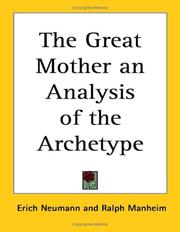
Erich Neumann
The Great Mother by Erich Neumann takes about 6 hours 58 minutes to read at 250 words a minute.
About 6 hours 58 minutes
A weekend read
First published 1955. 380 pages, about 104,500 words.
14 days at 30 minutes a day
Estimate based on 275 words per page.
At other speeds
| Slow, 150 words a minute | 11 hours 37 minutes |
| Average, 250 words a minute | 6 hours 58 minutes |
| Fast, 400 words a minute | 4 hours 21 minutes |
The page count is the median across 33 editions, so your copy may differ. How we calculate.
About the book
Neumann examines how the Feminine has been experienced and expressed in many cultures from prehistory to our own time. Appearing as goddess and demon, gate and pillar, garden and tree, hovering sky and containing vessel, the Feminine is seen as an essential factor in the dialectical relation of individual consciousness, symbolized by the child, to the ungraspable matrix, symbolized by the Great Mother. Erich Neumann,was a psychologist, philosopher, writer, and student of Carl Jung. Career Neumann was born in Berlin to a Jewish family.[1] He received his PhD in Philosophy from the University of Erlangen-Nuremberg in 1927 and then continued to study medicine at the University of Berlin, where he acquired his first degree in medicine in 1933. In 1934 Neumann and his wife Julia, who had been Zionists since they were teenagers, moved to Tel Aviv.[1] For many years, he regularly returned to Zürich, Switzerland to give lectures at the C. G. Jung Institute. He also lectured frequently in England, France and the Netherlands, and was a member of the International Association for Analytical Psychology and president of the Israel Association of Analytical Psychologists. He practiced analytical psychology in Tel Aviv from 1934 until his death from kidney cancer in 1960.[1] Contributions Neumann contributed to the field of developmental psychology and the psychology of consciousness and creativity. He had a theoretical and philosophical approach to analysis, contrasting with the more clinical concern in England and the United States. His most valuable contribution to psychology was the empirical concept of "centroversion", a synthesis of extra- and introversion. However, he is best known for his theory of feminine development, a theory formulated in numerous publications, most notably The Great Mother. His works also elucidate the way mythology throughout history reveals aspects of the development of consciousness that are parallel in both the individual and society as a whole…
Subjects: Mother goddesses, Religions, Subconsciousness (Psychology), Mother-goddesses, Déesses mères, Religion