How long does it take to read The Golden Asse of Lucius Apuleius?
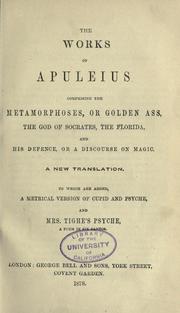
Ovid, Lucius Apuleius, Ed T. E. Page, Adlington, W.; Gaselee, S., William Adlington, Stephen Gaselee, W. Adlington, S. Gaselee, William Adlingotn, William Howe, Abraham Veale, Conrad Seiler, Adlington, W., translator, George Saintsbury, Apuleius, Charles Whibley, w. adlington and s. gaselee, Thomas Taylor, Mary Tighe, Hudson Gurney, robert graves, John C. Griffiths, Jacob van der Vliet, Ĭosyp Kobiv, I︠U︡riĭ T︠S︡ymbali︠u︡k, Jean de Montlyard, Filippo Beroaldo, Giovanni Andrea Bussi, Aristotle, Pietro Balbi, Konrad Sweynheim, Arnold Pannartz, Filiberto Remigio conte Costa della Trinità, Adriana R. Salem, Boies Penrose, Hermes Trismegistus, Albinus, Pierre Médan, Lucius of Madaura, August Rode, Carlos García Gual, ʻAlī Fahmī Khashīm, Ermil Ivanovich Kostrov, J. A. Maury, James Morwood, S. ʻEli, Rudolf Helm, Paulus Thomas, Edward Carpenter, W. H. D. Rouse, Paul Carus, Anna Morena Mozzillo, Alejandro Coroleu, Antonio Betancor, Gervaso Orefice, Eduard Norden, L. Osborn, Charles Stuttaford, Jessie Mothersole, Erich Neumann, Yoram Bronowski, Jean de La Fontaine, John Lockman, Claude-Ignace Brugière de Barante, Antoine-Denis Bailly, Raphael, Anne-Louis Girodet-Trioson, Karl Weyman, A. J. Pons, Walter Pater, Laurel Press, Otto Jahn, John Lyde Wilson
The Golden Asse of Lucius Apuleius by Ovid, Lucius Apuleius, Ed T. E. Page, Adlington, W.; Gaselee, S., William Adlington, Stephen Gaselee, W. Adlington, S. Gaselee, William Adlingotn, William Howe, Abraham Veale, Conrad Seiler, Adlington, W., translator, George Saintsbury, Apuleius, Charles Whibley, w. adlington and s. gaselee, Thomas Taylor, Mary Tighe, Hudson Gurney, robert graves, John C. Griffiths, Jacob van der Vliet, Ĭosyp Kobiv, I︠U︡riĭ T︠S︡ymbali︠u︡k, Jean de Montlyard, Filippo Beroaldo, Giovanni Andrea Bussi, Aristotle, Pietro Balbi, Konrad Sweynheim, Arnold Pannartz, Filiberto Remigio conte Costa della Trinità, Adriana R. Salem, Boies Penrose, Hermes Trismegistus, Albinus, Pierre Médan, Lucius of Madaura, August Rode, Carlos García Gual, ʻAlī Fahmī Khashīm, Ermil Ivanovich Kostrov, J. A. Maury, James Morwood, S. ʻEli, Rudolf Helm, Paulus Thomas, Edward Carpenter, W. H. D. Rouse, Paul Carus, Anna Morena Mozzillo, Alejandro Coroleu, Antonio Betancor, Gervaso Orefice, Eduard Norden, L. Osborn, Charles Stuttaford, Jessie Mothersole, Erich Neumann, Yoram Bronowski, Jean de La Fontaine, John Lockman, Claude-Ignace Brugière de Barante, Antoine-Denis Bailly, Raphael, Anne-Louis Girodet-Trioson, Karl Weyman, A. J. Pons, Walter Pater, Laurel Press, Otto Jahn, John Lyde Wilson takes about 3 hours 6 minutes to read at 250 words a minute.
About 3 hours 6 minutes
A weekend read
First published 1469. 169 pages, about 46,475 words.
7 days at 30 minutes a day
Estimate based on 275 words per page.
At other speeds
| Slow, 150 words a minute | 5 hours 10 minutes |
| Average, 250 words a minute | 3 hours 6 minutes |
| Fast, 400 words a minute | 1 hour 56 minutes |
The page count is the median across 377 editions, so your copy may differ. How we calculate.
About the book
"These rhetorical texts by Apuleius, second-century Latin writer and author of the famous novel Metamorphoses or Golden Ass, have not been translated in English since 1909. They are some of the very few Latin speeches surviving from their period, and constitute important evidence for Latin and Roman North African social and intellectual culture in the second century A.D. They are the work of a talented writer who is being increasingly viewed as the major literary artist of his time in Latin." "The Apologia, Apuleius' self-defence against a charge of magic delivered in North Africa in A.D. 158-9, has been well described as 'a masterpiece of the Second Sophistic'. It is a brilliant, lively, and colourful piece and is the only Latin forensic oration preserved from the second century A.D., providing important evidence for contemporary North African life." "The Florida ('flowery pieces') is a collection of excerpts deriving from an earlier anthology of Apuleian speeches, most apparently delivered at Carthage in the 160s A.D. As a whole, these passages offer a unique view of the rhetorical practice of a performing intellectual in Latin in the second century A.D. They also give important information on civic life in Carthage through their treatment of proconsuls and the local senate." "The De Deo Socratis, probably also from the 160s, is an oration in the form of a popular philosophical lecture on the 'god' of Socrates, the inner voice which, according to Plato, advised him. This is the only surviving sophistic declamation in Latin. The material is treated brilliantly by Apuleius, being much ornamented with poetic quotation and rhetorical and stylistic pyrotechnics."--Jacket.
Subjects: Rhetoric, Speeches, addresses, etc., Latin, Apuleius, Rhetoric, ancient, Metamorphosis -- Fiction, Fiction