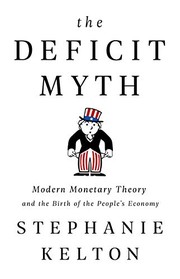
How long does it take to read The Deficit Myth?
Stephanie Kelton
The Deficit Myth by Stephanie Kelton takes about 6 hours 10 minutes to read at 250 words a minute.
About 6 hours 10 minutes
A weekend read
First published 2020. 336 pages, about 92,400 words.
13 days at 30 minutes a day
Estimate based on 275 words per page.
At other speeds
| Slow, 150 words a minute | 10 hours 16 minutes |
| Average, 250 words a minute | 6 hours 10 minutes |
| Fast, 400 words a minute | 3 hours 51 minutes |
The page count is the median across 8 editions, so your copy may differ. How we calculate.
About the book
The leading thinker and most visible public advocate of modern monetary theory - the freshest and most important idea about economics in decades - delivers a radically different, bold, new understanding for how to build a just and prosperous society. Stephanie Kelton's brilliant exploration of modern monetary theory (MMT) dramatically changes our understanding of how we can best deal with crucial issues ranging from poverty and inequality to creating jobs, expanding health care coverage, climate change, and building resilient infrastructure. Any ambitious proposal, however, inevitably runs into the buzz saw of how to find the money to pay for it, rooted in myths about deficits that are hobbling us as a country. Kelton busts through the myths that prevent us from taking action: that the federal government should budget like a household, that deficits will harm the next generation, that deficits crowd-out private investment and undermine long-term growth, that entitlements are propelling us toward a grave fiscal crisis. MMT, as Kelton shows, shifts the terrain from narrow budgetary questions to one of broader economic and social benefits. With its important new ways of understanding money, taxes, and the critical role of deficit spending, MMT redefines how to responsibly use our resources so that we can maximize our potential as a society. MMT gives us the power to imagine a new politics and a new economy and move from a narrative of scarcity to one of opportunity.
Subjects: Modern Monetary Theory, MMT, Macroeconomics, Monetary policy, Economics, Women in Economics