How long does it take to read The Age of Reason?
Being an Investigation of True and Fabulous Theology
The Age of Reason by Thomas Paine takes about 2 hours 54 minutes to read at 250 words a minute.
About 2 hours 54 minutes
An evening's read
First published 1794. 158 pages, about 43,450 words.
6 days at 30 minutes a day
Estimate based on 275 words per page.
At other speeds
| Slow, 150 words a minute | 4 hours 50 minutes |
| Average, 250 words a minute | 2 hours 54 minutes |
| Fast, 400 words a minute | 1 hour 49 minutes |
The page count is the median across 56 editions, so your copy may differ. How we calculate.
About the book
Thomas Paine who was a dynamic philosophical presence in the American Revolution of 1776 wrote his last book in 1795 on an investigation and commentary of organized religion with a focus on Christianity. Paine said that his "religious duties" included doing justice, loving benevolence, and attempting to make others happy. He called himself a deist which is a person who believes in the existence of a God based on the evidence of reason and nature but not on supernatural revelation. In this book he outlines deism as a rational religious belief and offers an analysis of the Bible based on textual content. He makes comparisons of the internal arguments of the Old and New Testaments by explaining, for example, inconsistencies of the biographic accounts in the four gospels. Paine suggests that since they were written separate of each other their basis is no better than hearsay. Because the United States convicted Paine of seditious libel in 1792, he escaped to France where he was selected to be a member of its National Convention. But there he conflicted with Robespierre, and while awaiting his arrest he wrote the first part of "The Age of Reason." Afterwards he was confined in Luxembourg and wrote the second half of the book. The work was published in 1795 and serves as a criticism of established religion from the point of view of the 18th century deists. Paine's clear and concise understanding of the development of the Christian religion from its pagan origins is especially significant when the reader examines the interconnecting references and implications of superstition and fallacy that are still involved in any ceremonial aspect. And, finally, Thomas Paine explains the answer to any confrontation best of all: "The most formidable weapon against errors of every kind is Reason."Please Note: This book is easy to read in true text, not scanned images that can sometimes be difficult to decipher. The Microsoft eBook has a contents page linked to the chapter headings for…
Subjects: Rationalism, Theology, Reason, Prophecies, Bible, Messiahship
More by Thomas Paine
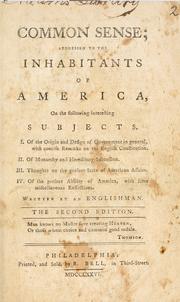 Common Sense 1.1 h
 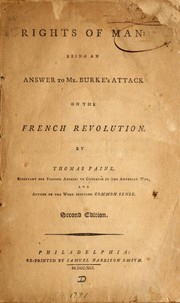 Rights of Man 3.3 h
  The United States in Literature [with Three Long Stories] -- Seventh Edition 15.0 h
  Prentice Hall Literature--Timeless Voices, Timeless Themes--The American Experience 22.5 h
  The Age of Reason 3.2 h
  Common Sense, The Rights of Man and Other Essential Writings of Thomas Paine 7.6 h