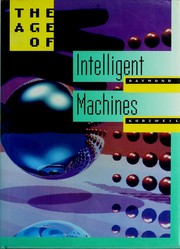
How long does it take to read The Age of Intelligent Machines?
The Age of Intelligent Machines by Ray Kurzweil takes about 10 hours 22 minutes to read at 250 words a minute.
About 10 hours 22 minutes
A week or two of reading
First published 1990. 565 pages, about 155,375 words.
21 days at 30 minutes a day
Estimate based on 275 words per page.
At other speeds
| Slow, 150 words a minute | 17 hours 16 minutes |
| Average, 250 words a minute | 10 hours 22 minutes |
| Fast, 400 words a minute | 6 hours 28 minutes |
The page count is the median across 2 editions, so your copy may differ. How we calculate.
About the book
What is artificial intelligence? At its essence, it is another way of answering a central question that has been debated by scientists, philosophers, and theologians for thousands of How does the human brain - three pounds of ordinary matter - give rise to thought? With this question in mind, inventor and visionary computer scientist Raymond Kurzweil probes the past, present, and future of artificial intelligence, from its earliest philosophical and mathematical roots through today's moving frontier, to tantalizing glimpses of 21st-century machines with superior intelligence and truly prodigious speed and memory. Lavishly illustrated and easily accessible to the nonspecialist, "The Age of Intelligent Machines provides the background needed for a full understanding of the enormous scientific potential represented by intelligent machines and of their equally profound philosophic, economic, and social implications. It examines the history of efforts to understand human intelligence and to emulate it by building devices that seem to act with human capabilities. Running alongside Kurzweil's historical and scientific narrative, are 23 articles examining contemporary issues in artificial intelligence by such luminaries as Daniel Dennett, Sherry Turkle, Douglas Hofstadter, Marvin Minsky, Seymour Papert, Edward Feigenbaum, Allen Newell, and George Gilder. Raymond Kurzweil is the founder, chairman, and chief executive officer of Kurzweil Applied Intelligence, Kurzweil Music Systems, and the Kurzweil Reading Machines division of Xerox. He was the principal developer of the first print-to-speech reading machine for the blind and other significant advances in artificial intelligencetechnology.
Subjects: Computers, Artificial intelligence, Expertensystem, Allgemeinwissen, Informationstheorie, Populärwissenschaftliche Darstellung