How long does it take to read Reflections on Exile and Other Essays?
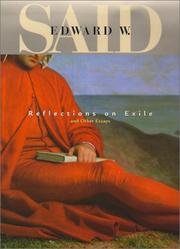
Edward W. Said, Rosa Gallego Blanco
Reflections on Exile and Other Essays by Edward W. Said, Rosa Gallego Blanco takes about 11 hours 19 minutes to read at 250 words a minute.
About 11 hours 19 minutes
A week or two of reading
First published 2000. 617 pages, about 169,675 words.
23 days at 30 minutes a day
Estimate based on 275 words per page.
At other speeds
| Slow, 150 words a minute | 18 hours 51 minutes |
| Average, 250 words a minute | 11 hours 19 minutes |
| Fast, 400 words a minute | 7 hours 4 minutes |
The page count is the median across 8 editions, so your copy may differ. How we calculate.
About the book
This Long-Awaited Collection of literary and cultural essays by Edward W. Said, the first since Harvard University Press published The World, the Text, and the Critic in 1983, reconfirms what no one can doubt -- that Said is the most impressive, consequential, and elegant critic of our time -- and offers further evidence of how much the fully engaged critical mind can contribute to the reservoir of value, thought, and action essential to our lives. As in the title essay, the widely admired "Reflections on Exile," the fact of his own exile and the fate of the Palestinians have given both form and the force of intimacy to the questions Said has pursued. Taken together, these essays -- from the famous to those that will surprise even Said's most assiduous followers -- afford rare insight into the formation of a critic and the development of an intellectual vocation. Said's topics are many and diverse, from the movie heroics of Tarzan to the machismo of Ernest Hemingway to the shades of difference that divide Alexandria and Cairo. He offers major reconsiderations of writers and artists such as George Orwell, Giambattista Vico, Georg Lukacs, R.P. Blackmur, E.M. Cioran, Naguib Mahfouz, Herman Melville, Joseph Conrad, Walter Lippmann, Samuel Huntington, Antonio Gramsci, and Raymond Williams. Said makes a strong and eloquent attack on what he calls "aestheticized powerlessness," a habitual stance of many in the academy. Most of the key debates in the humanities over the last thirty years are taken up in this book, and a number of them are given definitive treatment here.
Subjects: Politics and culture, Criticism, Political aspects of Criticism, Theory, History and criticism, Literature, Modern