How long does it take to read Poems?
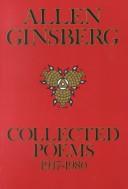
Poems by Allen Ginsberg takes about 8 hours 13 minutes to read at 250 words a minute.
About 8 hours 13 minutes
A week or two of reading
First published 1968. 448 pages, about 123,200 words.
17 days at 30 minutes a day
Estimate based on 275 words per page.
At other speeds
| Slow, 150 words a minute | 13 hours 41 minutes |
| Average, 250 words a minute | 8 hours 13 minutes |
| Fast, 400 words a minute | 5 hours 8 minutes |
The page count is the median across 15 editions, so your copy may differ. How we calculate.
About the book
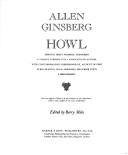
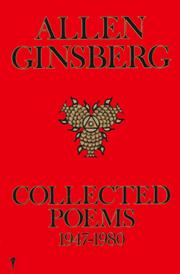
Allen Ginsberg, one of America's most distinguished living poets, turned 70 this year. Selected Poems 1947-1995 commemorates his brilliant career and honors a landmark birthday. Ginsberg personally chose the selections for this handy volume and has written a retrospective Apologia that places the poems from each decade in their historical and literary context. Here are well-known masterpieces such as the lyric "Howl" and the narrative "Kaddish" - classic works of American literature - as well as more recent gems, the long dream poem "White Shroud," the visionary "After Lalon," and the political rock lyric "The Ballad of the Skeletons.". The pieces included in Selected Poems 1947-1995, which span five decades of work, document Ginsberg's spiritual path during a life devoted to exploring the creative possibilities of the conscious mind. Ginsberg's verse is always raw-toned, often whimsical, in both style and content, and displays elegant technical variety from singable exact lyrics to Sapphics to Skeltonics to twelve-bar blues to projective open-form verse and "spontaneous bop prosody." Ginsberg takes readers on a tour of his intelligence as a poet, from the transcendent-themed early poems such as "Magic Psalm" (1960) and "T.V. Baby" fragments (1961), to the poetic realism of the later 1960s with which he confronted and challenged a nation at war, to the integration of song (rags, ballads, and blues) into his poetic repertoire in the early 1970s. Many long poems - including "The Fall of America" and "Iron Horse" - have been edited to reveal exquisite passages hitherto unnoticed by many readers. Ginsberg's immersion in Eastern thought and his hands-on practice of Tibetan Buddhism is reflected in poems throughout this collection. In contrast, readers will delight in highlights of his erotic narrative "Contest of Bards" (1977), at once baroque and idiosyncratic, which was inspired in great part by a marathon reading of William Blake's complete poetry. His most recent…
Subjects: American poetry, Poetry, Gay men, Beats (Persons), Poetry (poetic works by one author), Gay men's writings, American