How long does it take to read No Pity?
Joseph P. Shapiro
No Pity by Joseph P. Shapiro takes about 6 hours 57 minutes to read at 250 words a minute.
About 6 hours 57 minutes
A weekend read
First published 1993. 379 pages, about 104,225 words.
14 days at 30 minutes a day
Estimate based on 275 words per page.
At other speeds
| Slow, 150 words a minute | 11 hours 35 minutes |
| Average, 250 words a minute | 6 hours 57 minutes |
| Fast, 400 words a minute | 4 hours 21 minutes |
The page count is the median across 5 editions, so your copy may differ. How we calculate.
About the book
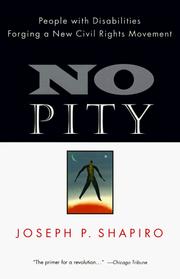
Jerry's Kids. The Special Olympics. A blind person with a bundle of pencils in one hand and a tin cup in the other. An old woman being helped across the street by a Boy Scout. The poster child, struggling bravely to walk. The meager, embittered life of the "wheelchair-bound." For most Americans, these are the familiar, comfortable images of the disabled: benign, helpless, even heroic, struggling against all odds and grateful for the kindness of strangers. Yet no set of images could be more repellent to people with disabilities. In No Pity: People with Disabilities Forging a New Civil Rights Movement, Joe Shapiro of U.S. News & World Report tells of a political awakening few nondisabled Americans have even imagined. There are over 43 million disabled people in this country alone; for decades most of them have been thought incapable of working, caring for themselves, or contributing to society. But during the last twenty-live years, they, along with their parents and families, have begun to recognize that paraplegia, retardation, deafness, blindness, AIDS, autism, or any of the hundreds of other chronic illnesses and disabilities that differentiate them from the able-bodied are not tragic. The real tragedy is prejudice, our society's and the medical establishment's refusal to recognize that the disabled person is entitled to every right and privilege America can offer. No Pity's chronicle of disabled people's struggle for inclusion, from the seventeenth-century deaf communities on Martha's Vineyard to the enactment of the Americans with Disabilities Act of 1992, is only part of the story. Joe Shapiro's five years of in-depth reporting have uncovered many personal stories as well. You will read of Larry McAfee; most Americans, assuming that a quadriplegic's life was not worth living, supported his decision to commit suicide rather than cope with a system that denied him the right to work or make his own decisions. Here, too, is the story of Nancy Cleaveland, a…
Subjects: Civil rights, Government policy, History, People with disabilities, Behindertenrecht, Discrimination against the handicapped