How long does it take to read Narrative Therapy?
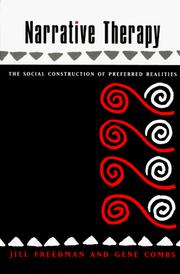
Jill Freedman, Gene Combs
Narrative Therapy by Jill Freedman, Gene Combs takes about 5 hours 36 minutes to read at 250 words a minute.
About 5 hours 36 minutes
A weekend read
First published 1996. 305 pages, about 83,875 words.
12 days at 30 minutes a day
Estimate based on 275 words per page.
At other speeds
| Slow, 150 words a minute | 9 hours 19 minutes |
| Average, 250 words a minute | 5 hours 36 minutes |
| Fast, 400 words a minute | 3 hours 30 minutes |
The page count is the median across 3 editions, so your copy may differ. How we calculate.
About the book
This book describes the clinical application of the growing body of ideas and practices that has come to be known as narrative therapy. The primary focus is on the ways of working that have arisen among therapists who, inspired by the pioneering efforts of Michael White and David Epston, have organized their thinking around two metaphors: narrative and social construction. The authors are as concerned with attitude as with technique. Believing that a solid grounding in the worldview from which narrative practices spring is essential, they begin with an overview of the historical, philosophical, and ideological aspects of the narrative/social constructionist perspective. This involves also telling the story of their own development as particular therapists in a particular part of the world during a particular historical period. The heart of the book is devoted to specific clinical practices: locating problems in their sociocultural context, opening space for alternative stories, developing stories, questioning, reflecting, thickening plots, and spreading the news. Each practice is described, located in relation to the ideas and attitudes that support it, and illustrated with clinical examples. In addition to conversations with people illustrating particular practices, three transcripts are included to show the subtle use of questions to develop alternative, preferred realities. Drawing upon the thinking of White and Epston, Karl Tomm, and others, the final chapter looks at the ethics of relationship that guide narrative therapists in the use of specific practices.
Subjects: Constructivism (Psychology), Metaphor, Narrative therapy, Postmodernism, Psychological aspects, Psychological aspects of Postmodernism