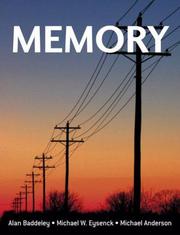
How long does it take to read Memory?
Alan D. Baddeley, Michael W. Eysenck, Michael C. Anderson
Memory by Alan D. Baddeley, Michael W. Eysenck, Michael C. Anderson takes about 10 hours 44 minutes to read at 250 words a minute.
About 10 hours 44 minutes
A week or two of reading
First published 2009. 585 pages, about 160,875 words.
22 days at 30 minutes a day
Estimate based on 275 words per page.
At other speeds
| Slow, 150 words a minute | 17 hours 53 minutes |
| Average, 250 words a minute | 10 hours 44 minutes |
| Fast, 400 words a minute | 6 hours 42 minutes |
The page count is the median across 16 editions, so your copy may differ. How we calculate.
About the book
People seem to be intrigued by memory, and by its sometimes spectacular failure in (for example) people with amnesia. However, students of memory sometimes fail to retain this fascination. The reason is clear: in order to study memory we must carry out carefully-designed experiments, which can seem boring even when they are exciting science. Fortunately, we now know enough about memory to relate laboratory studies to the world beyond. In other words, our scientific knowledge of memory and how it works can help us to explain those aspects of memory that most people find of greatest interest. This book presents a thorough, accessible and appealing overview of the field, written with students in mind, by some of the world's leading researchers. It starts with a brief overview and explanation of the scientific approach to memory before going on to discuss the basic characteristics of the various memory systems and how they work. Summaries of short-term and working memory are followed by chapters on learning, the role of organization in memory, the ways in which our knowledge of the world is stored, retrieval, and on intentional and motivated forgetting. The latter half of the book involves the broader application of our basic understanding of memory, with chapters on autobiographical memory, amnesia, and on memory in childhood and aging. After chapters discussing eyewitness testimony and prospective memory, a final chapter addresses an issue of great importance to students - how to improve your memory. Each chapter of the book is written by one of the three authors, an approach which takes full advantage of their individual expertise, style and personality. This enhances students' enjoyment of the book, allowing them to share the authors' own fascination with human memory.
Subjects: Memory, Psychology