How long does it take to read Lean Thinking?
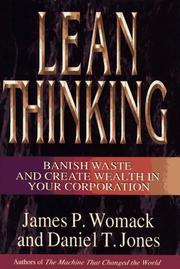
Lean Thinking by James P. Womack takes about 7 hours 16 minutes to read at 250 words a minute.
About 7 hours 16 minutes
A weekend read
First published 1996. 396 pages, about 108,900 words.
15 days at 30 minutes a day
Estimate based on 275 words per page.
At other speeds
| Slow, 150 words a minute | 12 hours 6 minutes |
| Average, 250 words a minute | 7 hours 16 minutes |
| Fast, 400 words a minute | 4 hours 32 minutes |
The page count is the median across 5 editions, so your copy may differ. How we calculate.
About the book
"After a decade of downsizing and reengineering, most companies in North America, Europe, and Japan are still stuck, searching for a formula for sustainable growth and success. The problem, as Womack and Jones explain in Lean Thinking, is that managers have lost sight of value for the customer and how to create it. By focusing on their existing organizations and outdated definitions of value, managers create waste, and the economies of the advanced countries continue to stagnate.". "What's needed instead is lean thinking to help managers clearly specify value, to line up all the value-creating activities for a specific product along a value stream, and to make value flow smoothly at the pull of the customer in pursuit of perfection. The first part of the book describes each of these concepts and makes them come alive with striking examples.". "As Lean Thinking clearly demonstrates, these simple ideas can breathe new life into any company in any industry, routinely doubling both productivity and sales while stabilizing employment. But most managers will need guidance on how to make the lean leap in their firm. Part II provides a step-by-step action plan, based on in-depth studies of fifty lean companies in a wide range of industries across the world - including Pratt & Whitney, Porsche, and Toyota.". "Even those readers who believe they have embraced lean thinking will discover in Part III that another dramatic leap is possible by creating a lean enterprise for each of their product families that tightly links all value-creating activities from concept to product launch, from order to delivery, and from raw materials into the arms of the consumer. This new concept takes the best features from the American, German, and Japanese industrial traditions and recombines them in a way that can be applied to every economic activity, from long distance travel to construction to health care."--BOOK JACKET.
Subjects: Industrial efficiency, Organizational Culture, Value added, Lean manufacturing, Cost Control, Bedrijfsbeleid