How long does it take to read Diagnostic and Statistical Manual of Mental Disorders?
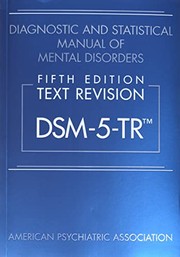
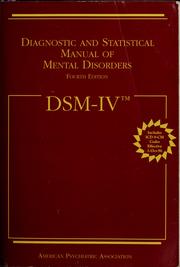
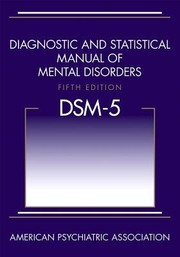
DSM-5 - 5. ed.
American Psychiatric Association
Diagnostic and Statistical Manual of Mental Disorders by American Psychiatric Association takes about 17 hours 22 minutes to read at 250 words a minute.
About 17 hours 22 minutes
A long haul
First published 2013. 947 pages, about 260,425 words.
35 days (about 5 weeks) at 30 minutes a day
Estimate based on 275 words per page.
At other speeds
| Slow, 150 words a minute | 28 hours 56 minutes |
| Average, 250 words a minute | 17 hours 22 minutes |
| Fast, 400 words a minute | 10 hours 51 minutes |
The page count is the median across 2 editions, so your copy may differ. How we calculate.
About the book
This is the standard reference for clinical practice in the mental health field. Since a complete description of the underlying pathological processes is not possible for most mental disorders, it is important to emphasize that the current diagnostic criteria are the best available description of how mental disorders are expressed and can be recognized by trained clinicians. The classification of disorders is harmonized with the World Health Organization's International Classification of Diseases (ICD), the official coding system used in the United States. The disorders included in DSM-5 were reordered into a revised organizational structure meant to stimulate new clinical perspectives. This new structure corresponds with the organizational arrangement of disorders planned for ICD-11 scheduled for release in 2015. Other enhancements have been introduced to promote ease of use across all settings, including: Representation of developmental issues related to diagnosis; Integration of scientific findings from the latest research in genetics and neuroimaging; Consolidation of autistic disorder, Asperger's disorder, and pervasive developmental disorder into autism spectrum disorder; Streamlined classification of bipolar and depressive disorders; Restructuring of substance use disorders for consistency and clarity; Enhanced specificity for major and mild neurocognitive disorders; Transition in conceptualizing personality disorders; New disorders and features; Online enhancements.-- Publisher description.
Subjects: Classification, Handbooks, manuals, Mental illness, Diagnosis, Mental Disorders, Online-Ressource