How long does it take to read Darwin's Black Box?
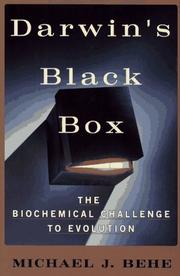
Michael J. Behe
Darwin's Black Box by Michael J. Behe takes about 5 hours 38 minutes to read at 250 words a minute.
About 5 hours 38 minutes
A weekend read
First published 1996. 307 pages, about 84,425 words.
12 days at 30 minutes a day
Estimate based on 275 words per page.
At other speeds
| Slow, 150 words a minute | 9 hours 23 minutes |
| Average, 250 words a minute | 5 hours 38 minutes |
| Fast, 400 words a minute | 3 hours 31 minutes |
The page count is the median across 5 editions, so your copy may differ. How we calculate.
About the book
Virtually all serious scientists accept the truth of Darwin's theory of evolution. While the fight for its acceptance has been a long and difficult one, after a century the battle is over. Biologists are now confident that their remaining questions, such as how life on Earth began, or how the Cambrian explosion could have produced so many new species in such a short time, will be found to have Darwinian answers. They, like most of the rest of us, accept Darwin's theory to be true. But should we? What would happen if we found something that radically challenged the now-accepted wisdom? As Behe engagingly demonstrates, using the examples of vision, blood-clotting, cellular transport, and more, the biochemical world comprises an arsenal of chemical machines, made up of finely calibrated, interdependent parts. For Darwinian evolution to be true, there must have been a series of mutations, each of which produced its own working machine, that led to the complexity we can now see. The more complex and interdependent each machine's parts are shown to be, the harder it is to envision Darwin's gradualistic paths. Michael Behe is not a creationist. He believes in the scientific method, and he does not look to religious dogma for answers to these questions. But he argues persuasively that biochemical machines must have been designed - either by God, or by some other higher intelligence. For decades science has been frustrated, trying to reconcile the astonishing discoveries of modern biochemistry to a nineteenth-century theory that cannot accommodate them. With the publication of Darwin's Black Box, it is time for scientists to allow themselves to consider exciting new possibilities, and for the rest of us to watch closely.
Subjects: Evolution (Biology), Molecular evolution, Intelligent design (Teleology), Evolution, Life, origin, Biochemistry