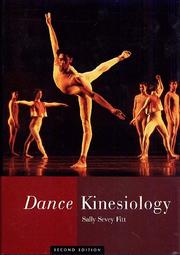
How long does it take to read Dance Kinesiology?
Sally Sevey Fitt
Dance Kinesiology by Sally Sevey Fitt takes about 8 hours 6 minutes to read at 250 words a minute.
About 8 hours 6 minutes
A week or two of reading
First published 1988. 442 pages, about 121,550 words.
17 days at 30 minutes a day
Estimate based on 275 words per page.
At other speeds
| Slow, 150 words a minute | 13 hours 30 minutes |
| Average, 250 words a minute | 8 hours 6 minutes |
| Fast, 400 words a minute | 5 hours 4 minutes |
The page count is the median across 2 editions, so your copy may differ. How we calculate.
About the book
A working knowledge of the science of movement can help any dancer achieve the goals of excellent performance and avoidance of injury. For students and others in pursuit of that knowledge, Dance Kinesiology is a comprehensive introduction to the ways muscles and bones work in all types of dance. Dance Kinesiology explores virtually every aspect of dance movement, including the skeletal and muscular systems; muscular imbalances; physiological support systems; body types; movement behavior; somatics, efficiency, and relaxation; prevention of dance injuries; conditioning; and weight management. Emphasis is placed throughout on structural and neuromuscular analysis, the elements of kinesiology most pertinent to dance. Thoroughly revised and updated to reflect the continuing development of knowledge and techniques, the Second Edition includes new articles on eight important somatic systems from the dancer's point of view, each contributed by a trained practitioners. The book is further supplemented with more than 150 anatomical drawings; photographs illustrating technical concepts; fully illustrated practice exercises; tables for analysis of movement; and a list of suggested readings. Dance Kinesiology is must reading for all students of modern dance and ballet, as well as for dance educators, physical therapists, and choreographers. With the help of this book, dancers can discover their own physical strengths and limitations, enhance their ability to develop their bodies, and turn weaknesses into strengths.
Subjects: Dance, Physiological aspects of Dance, Biomechanics, Popular works, Physiological aspects, Danse