How long does it take to read A Short History of the Movies?
Gerald Mast, Bruce Kawin
A Short History of the Movies by Gerald Mast, Bruce Kawin takes about 10 hours 33 minutes to read at 250 words a minute.
About 10 hours 33 minutes
A week or two of reading
First published 1971. 575 pages, about 158,125 words.
22 days at 30 minutes a day
Estimate based on 275 words per page.
At other speeds
| Slow, 150 words a minute | 17 hours 34 minutes |
| Average, 250 words a minute | 10 hours 33 minutes |
| Fast, 400 words a minute | 6 hours 35 minutes |
The page count is the median across 18 editions, so your copy may differ. How we calculate.
About the book
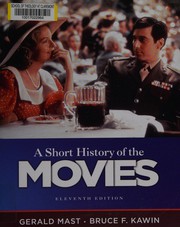
This is to date the most useful film history survey___It is the most balanced, the most accurate, the most sensitive to film as an art form. —Professor Elisabeth Weis Brooklyn College City University of New York Gerald Mast's A Short History of the Movies, first published in 1971, and now in this new, fourth edition, is the quintessential chronicle of movie history. Expanded with more stills—in black and white and in color—and with an additional chapter on foreign films, this classic has been updated by Mast to reflect a whole bevy of current trends. And, continuing the focus of the third edition, he places the achievements of film within the context of social practice and cultural convention. Gerald Mast presents a thorough, complete, and all-encompassing examination of the evolution of this "new art"—through the major styles, periods, genres, and works. From the birth of film in the late nineteenth century, to its present high-tech state some ninety years later, Mast escorts the reader on a comprehensive tour of this kinetic medium. He traces its origins from the early photographic visionaries, through the heyday of Hollywood, the emergence of neorealism and new waves, to the sophistication—both technical and cultural—of the 80s. With a style characterized by thought-fulness, clarity, and wit, Gerald Mast covers the gamut of film history. He discusses the roots of film, looking back to da Vinci's camera obscura, Daguerre's silvered copperplate, and Edison's Kinetoscope. He examines the auteur theory, reviewing D. W. Griffith, Chaplin, John Ford, Hitchcock, and Woody Allen. He investigates the films of Germany, France, Sweden, Japan, Australia—and their influence on and inspiration from the American cinema. From The Cabinet of Doctor Caligari to E.T., Mast also looks at the complex interplay between artistic and technical innovation. The moguls, the morals, the vamps and the cowboys, the art as an industry and as a social barometer—all are presented here. And…
Subjects: Motion pictures, Moving-pictures, History, Film theory & criticism, Performing Arts, Communication