How long does it take to read A Pattern Language?
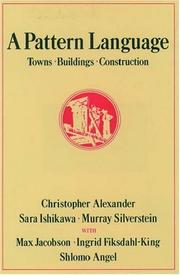
Christopher Alexander, Sara Ishikawa, Murray Silverstein, Max Jacobson, Ingrid Fiksdahl-King, Shlomo Angel, Nax Jacobsohn
A Pattern Language by Christopher Alexander, Sara Ishikawa, Murray Silverstein, Max Jacobson, Ingrid Fiksdahl-King, Shlomo Angel, Nax Jacobsohn takes about 21 hours 29 minutes to read at 250 words a minute.
Part of Center for Environmental Structure
Previous: The Oregon Experiment Next: The Timeless Way of Building
About 21 hours 29 minutes
A long haul
First published 1977. 1,172 pages, about 322,300 words.
43 days (about 7 weeks) at 30 minutes a day
Estimate based on 275 words per page.
At other speeds
| Slow, 150 words a minute | 35 hours 49 minutes |
| Average, 250 words a minute | 21 hours 29 minutes |
| Fast, 400 words a minute | 13 hours 26 minutes |
The page count is the median across 4 editions, so your copy may differ. How we calculate.
About the book
Alexander and his co-authors present us with over two hundred (roughly 250) "patterns" that they believe must be present in order for an environment to be pleasing, comfortable, or in their words, "alive." The patterns start at the most general level -- the first pattern, "Independent Regions," describes the ideal political entity, while another of my favorite patterns, "Mosaic of Subcultures," described the proper distribution of different groups within a city. The patterns gradually become more specific -- you'll read arguments about how universities should relate to the community, the proper placement of parks, the role of cafes in a city's life. If you wonder about the best design for a home, the authors will describe everything from how roofs and walls should be built, down to how light should fall within the home, where your windows should be placed, and even the most pleasant variety of chairs in the home. An underlying theme of all the patterns is that architecture, at its best, can be used to foster meaningful human interaction, and the authors urge us to be aware of how the houses we build can help us balance needs for intimacy and privacy.
Subjects: Symbolism in architecture, Town planning, Semiotics, Long Now Manual for Civilization, City planning, Human factors