How long does it take to read A Disability History of the United States?
Kim E. Nielsen
A Disability History of the United States by Kim E. Nielsen takes about 4 hours 11 minutes to read at 250 words a minute.
About 4 hours 11 minutes
A weekend read
First published 2012. 228 pages, about 62,700 words.
9 days at 30 minutes a day
Estimate based on 275 words per page.
At other speeds
| Slow, 150 words a minute | 6 hours 58 minutes |
| Average, 250 words a minute | 4 hours 11 minutes |
| Fast, 400 words a minute | 2 hours 37 minutes |
The page count is the median across 4 editions, so your copy may differ. How we calculate.
About the book
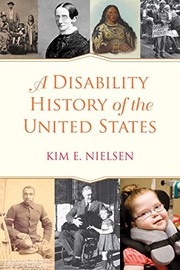
Covers the entirety of U.S. disability history, from pre-1492 to the present. Disability is not just the story of someone we love or the story of whom we may become; rather it is undoubtedly the story of our nation. It places the experiences of people with disabilities at the center of the American narrative. In many ways, it's a familiar telling. In other ways, however, it is a radical repositioning of U.S. history. By doing so, the book casts new light on familiar stories, such as slavery and immigration, while breaking ground about the ties between nativism and oralism in the late nineteenth century and the role of ableism in the development of democracy. This work pulls from primary-source documents and social histories to retell American history through the eyes, words, and impressions of the people who lived it. As the author, a historian and disability scholar argues, to understand disability history isn't to narrowly focus on a series of individual triumphs but rather to examine mass movements and pivotal daily events through the lens of varied experiences. Throughout the book, he illustrates how concepts of disability have deeply shaped the American experience from deciding who was allowed to immigrate to establishing labor laws and justifying slavery and gender discrimination. Included are narratives of blinded slaves being thrown overboard and women being involuntarily sterilized, as well as triumphant accounts of disabled miners organizing strikes and disability rights activists picketing Washington. This work fundamentally reinterprets how we view our nation's past: from a stifling master narrative to a shared history that encompasses us all.
Subjects: Sociology of disability, People with disabilities, Legal status, laws, History, Disabled Persons