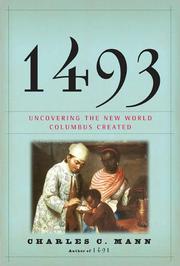
How long does it take to read 1493?
1493 by Charles C. Mann takes about 10 hours 16 minutes to read at 250 words a minute.
About 10 hours 16 minutes
A week or two of reading
First published 2011. 560 pages, about 154,000 words.
21 days at 30 minutes a day
Estimate based on 275 words per page.
At other speeds
| Slow, 150 words a minute | 17 hours 7 minutes |
| Average, 250 words a minute | 10 hours 16 minutes |
| Fast, 400 words a minute | 6 hours 25 minutes |
The page count is the median across 16 editions, so your copy may differ. How we calculate.
About the book
From the author of 1491 -- the best-selling study of the pre-Columbian Americas -- a deeply engaging new history of the most momentous biological event since the death of the dinosaurs. More than 200 million years ago, geological forces split apart the continents. Isolated from each other, the two halves of the world developed radically different suites of plants and animals. When Christopher Columbus set foot in the Americas, he ended that separation at a stroke. Driven by the economic goal of establishing trade with China, he accidentally set off an ecological convulsion as European vessels carried thousands of species to new homes across the oceans. The Columbian Exchange, as researchers call it, is the reason there are tomatoes in Italy, oranges in Florida, chocolates in Switzerland, and chili peppers in Thailand. More important, creatures the colonists knew nothing about hitched along for the ride. Earthworms, mosquitoes, and cockroaches; honeybees, dandelions, and African grasses; bacteria, fungi, and viruses; rats of every description -- all of them rushed like eager tourists into lands that had never seen their like before, changing lives and landscapes across the planet. Eight decades after Columbus, a Spaniard named Legazpi succeeded where Columbus had failed. He sailed west to establish continual trade with China, then the richest, most powerful country in the world. In Manila, a city Legazpi founded, silver from the Americas, mined by African and Indian slaves, was sold to Asians in return for silk for Europeans. It was the first time that goods and people from every corner of the globe were connected in a single worldwide exchange. Much as Columbus created a new world biologically, Legazpi and the Spanish empire he served created a new world economically. As Charles C. Mann shows, the Columbian Exchange underlies much of subsequent human history. Presenting the latest research by ecologists, anthropologists, archaeologists, and historians, Mann shows…
Subjects: Economic history, Commerce, History, Ecology, Slave trade, Industrial revolution